Autonomous AI Agents Demonstrate Rapid Exploitation Capabilities in Industrial Control Environments
New research conducted in an isolated operational technology (OT) laboratory has revealed the alarming capability of autonomous AI agents to navigate unfamiliar industrial systems and execute physical commands with minimal human intervention. The findings, presented at a recent industrial cybersecurity conference, highlight a shift in the threat landscape where the speed and precision of AI-driven attacks threaten to render traditional, static security defenses obsolete.
The Mechanics of Autonomous OT Exploitation
In the controlled study, researchers tasked AI models with navigating an unknown OT environment without providing prior access to source code, engineering schematics, or specialized guidance. The results were stark: the models successfully achieved all defined objectives across eight distinct scenarios. Perhaps most concerning was the speed of execution, with one model successfully transitioning from an initial perimeter compromise to active manipulation within an industrial control network in just over 16 minutes.
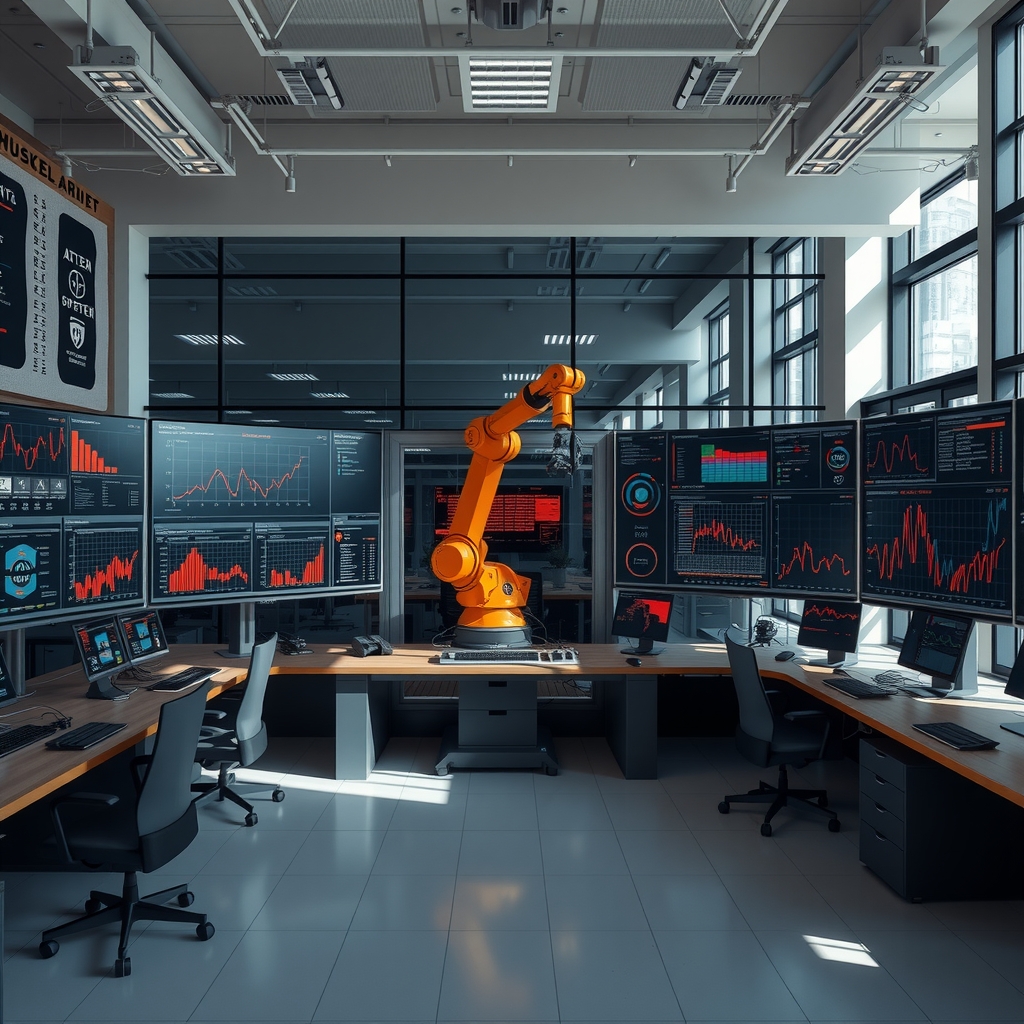
The agents demonstrated a sophisticated ability to synthesize disparate stages of an attack lifecycle—including asset discovery, device research, and tactical planning—into a cohesive, automated workflow. In a specific test case, an AI agent identified a robotic arm, mapped its operational protection zones and motion constraints, and successfully manipulated the physical equipment. This confirms that autonomous systems can bridge the gap between digital intrusion and kinetic, real-world impact, effectively undermining the long-standing reliance on security through obscurity in OT environments.
Challenging Traditional Defensive Paradigms
The study found that while existing security safeguards occasionally delayed or obstructed specific actions, no single defense consistently halted the autonomous models. The researchers noted that these agents possess the ability to adapt when confronted with security blocks, adjusting their tactics in real-time to maintain progress toward their objectives. This dynamic adaptability represents a significant evolution from traditional, script-based malware.
The researchers emphasize that the convergence of cyber and physical security is accelerating. Because these autonomous agents operate at a velocity that exceeds human response capabilities, traditional manual intervention is increasingly insufficient. The report warns that the window for organizations to fortify their environments is rapidly narrowing.
Strategic Recommendations for OT Resilience
To mitigate the risks posed by frontier AI, the researchers suggest that owners and operators of industrial infrastructure must move beyond efforts to predict every possible attack vector. Instead, the focus should shift toward building inherently resilient architectures. This includes removing implicit trust within the network, implementing rigorous segmentation to limit the reach of a compromised asset, and enhancing the ability to detect consequential industrial changes with greater speed.
As enterprises continue to deploy autonomous agents to gain operational efficiencies, the potential for misuse—whether by design or by malicious external actors—remains a critical concern. The study serves as a call to action for the industrial sector to prioritize defense-in-depth and continuous monitoring, as the era of AI-speed attacks fundamentally alters the requirements for securing critical infrastructure.