CISA warns of brake-control flaws in Elecbrakes trailer controllers
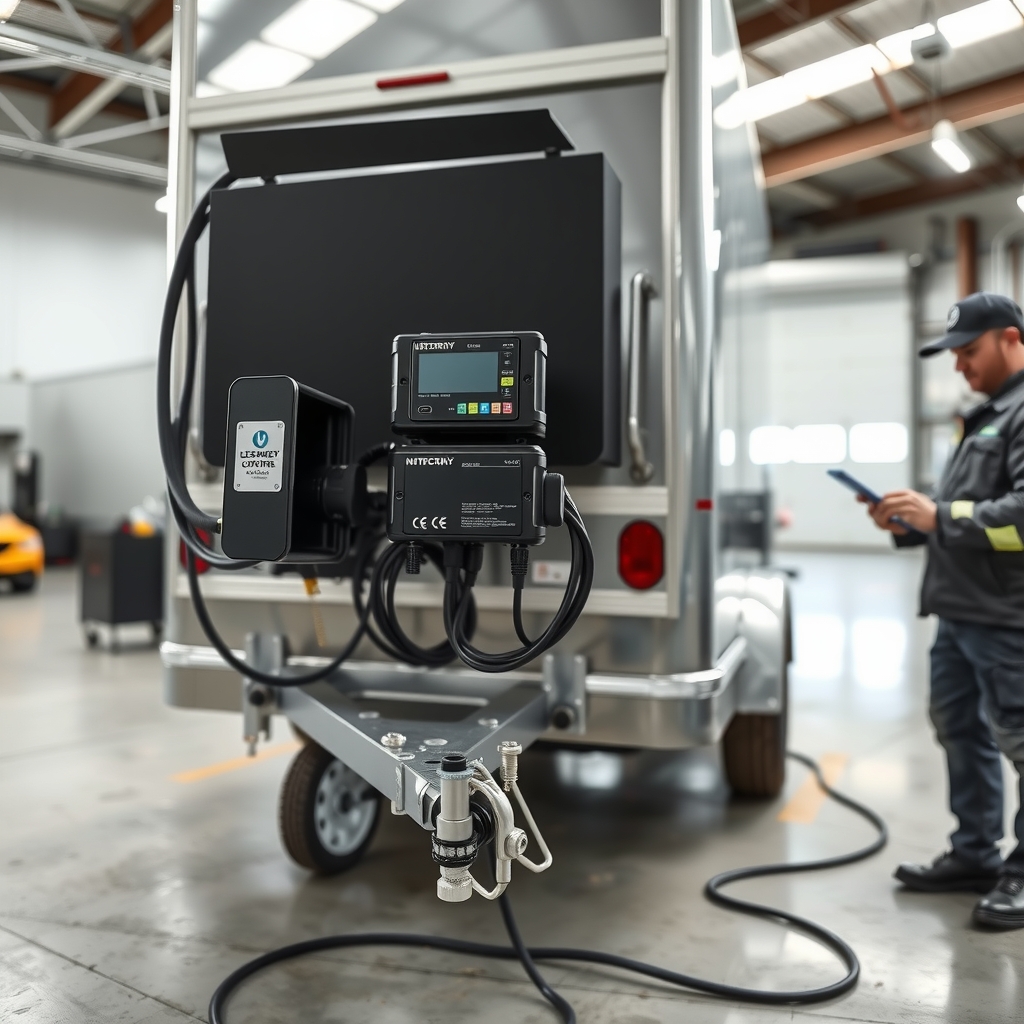
Three vulnerabilities in Elecbrakes EB2, VM1 and ELBC2000 trailer brake controllers could let an attacker interfere with braking and other safety functions, according to a November 19, 2026 advisory from the U.S. Cybersecurity and Infrastructure Security Agency (CISA). The issues include weaknesses in firmware updates and command handling, as well as a lack of authentication for a critical control function.
CISA warns that successful exploitation could allow an attacker to take control of a trailer’s brakes, change firmware or brake conditions, turn off brake lights, or disable other critical safety features. The advisory identifies the affected equipment as part of the transportation systems sector and says the products are deployed in Australia and New Zealand. The company is headquartered in Australia.
The affected versions are EB2 at or below 3.0.4.2.0, VM1 earlier than 1.3.4.2.1, and all versions of the ELBC2000. All three listed CVEs apply to each product family: CVE-2026-124281, CVE-2026-125273 and CVE-2026-96805. CISA gives CVE-2026-125273 a CVSS 3.1 score of 9.6, rated Critical. It rates the other two findings Medium under CVSS 3.1, with scores of 6.1 and 6.1 respectively; the advisory also lists CVSS 4.0 scores for the findings.
Three paths to influence controller behavior
CVE-2026-124281 concerns an unprotected firmware-update channel. CISA says this could allow firmware to be modified without authorization. The advisory classifies the issue as an exposed dangerous method or function. A firmware-integrity weakness is especially consequential in a device that governs braking, because changed firmware could affect the controller’s behavior.
CVE-2026-125273 involves the absence of replay or command-integrity protections. According to the advisory, commands do not include sequence numbers, nonces or session tokens. As a result, a captured command may be replayed, and the last command can persist across sessions. CISA classifies this as an authentication bypass by capture-replay.
CVE-2026-96805 is an unauthenticated command-injection issue. An in-range Bluetooth Low Energy (BLE) device could write to the control interface and influence braking without authentication or pairing, CISA says. This description makes proximity relevant to defenders: the documented exposure is from a device within BLE range, rather than a claim that the controller is directly reachable over the internet.
Patrick Forck and Jeremy McCarthy of Element Digital reported the vulnerabilities to CISA. The agency said it had no reports of public exploitation specifically targeting these flaws at the time of the advisory. That statement does not change the potential safety impact, and it is not evidence that the weaknesses have been exploited in a particular incident.
Firmware updates and legacy equipment
Elecbrakes has released fixes for the EB2 and VM1. Owners should use the Elecbrakes app to install EB2 firmware version 3.0.4.4.3 or VM1 firmware version 1.3.4.2.1, respectively. The advisory does not describe a fix for the ELBC2000. That controller is the predecessor to the EB2 and VM1 and is no longer sold; the vendor is determining how to address the vulnerabilities on that product.
Organizations and operators should identify whether affected controllers are in use and confirm their firmware versions. Where a supported product is affected, applying the vendor’s update is the stated remediation. The ELBC2000’s lack of an available remediation calls for a risk review that accounts for the equipment’s role and the consequences of a control failure. The advisory does not specify a replacement product or a timetable for an ELBC2000 fix.
Reduce exposure and assess safety impact
CISA recommends limiting control-system network exposure, keeping devices off the public internet, placing control systems and remote devices behind firewalls, and separating them from business networks. If remote access is necessary, the agency advises using more secure methods such as a VPN and keeping it updated. CISA also cautions that a VPN’s security depends on the devices connected through it.
For these particular controllers, network segmentation should complement—not replace—firmware remediation and review of BLE proximity. Operators should assess how a controller is used before making changes that could affect vehicle operations, and follow established internal procedures when investigating suspected malicious activity. CISA advises organizations to report suspected activity to the agency. No public indicators of compromise are provided in the advisory.